The Philosopher
Cato the Younger
The face
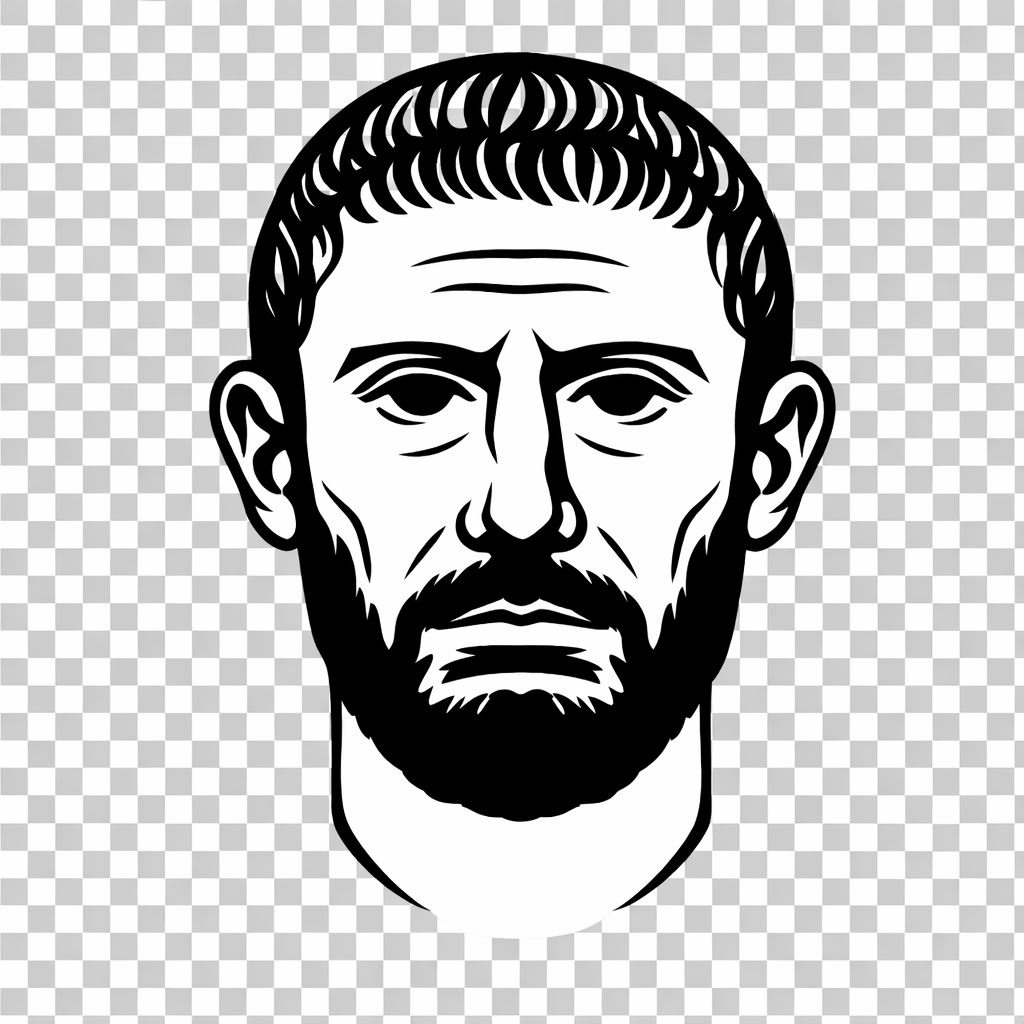
The background
- Nationality:
- Roman
- Branchs:
- Stoicism
- Period:
- Late Republic
The synopsis
Marcus Porcius Cato Uticensis, often called Cato the Younger or Cato Minor, was an influential conservative Roman senator during the late Roman Republic. Born in 95 BC and dying in 46 BC, he was a prominent figure known for his staunch advocacy for liberty and the preservation of Republican principles. A devout follower of Stoicism, Cato was recognized for his incorruptibility, his powerful oratory, and his dedication to upholding traditional Roman values (*mos maiorum*). His political career was marked by a principled opposition to powerful military leaders such as Julius Caesar and Pompey, whom he viewed as threats to the Republic. He held several significant political offices, including quaestor, plebeian tribune, and praetor, where he was noted for his honesty and integrity in managing state finances and enforcing laws. Cato's uncompromising stance and his efforts to curb the ambitions of figures like Caesar and Pompey ultimately contributed to the political instability that led to Caesar's Civil War. Despite his efforts to defend the Republic, the political landscape shifted dramatically, and after suffering defeats in the civil war, Cato chose to commit suicide in Utica rather than submit to Caesar's rule, becoming a martyr for the Republican cause. His life and death have since been interpreted as symbols of resistance against tyranny and a testament to unwavering adherence to principle.
The works