The Philosopher
Cass Sunstein
The face
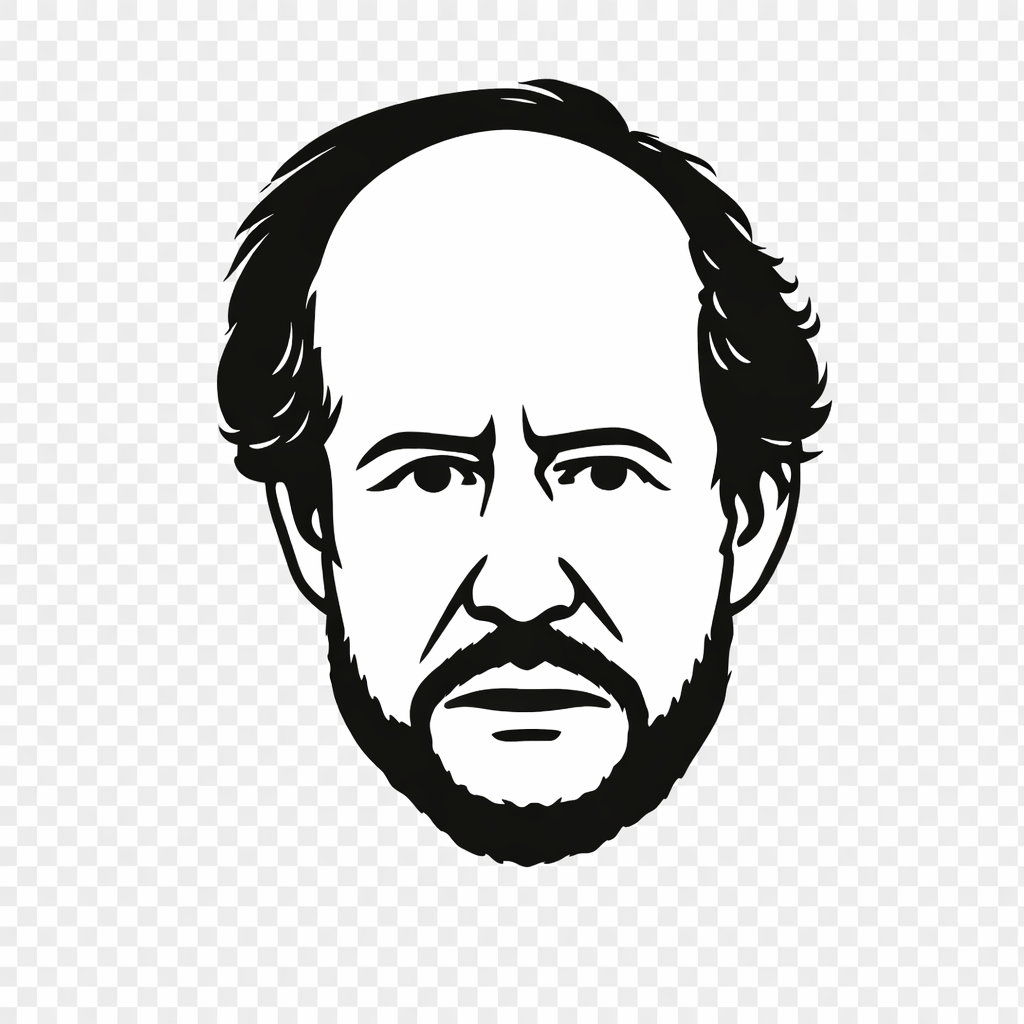
The background
- Nationality:
- American
- Schools:
- Law and economics
The synopsis
The works
The World According to Star Wars
Nudge
After the Rights Revolution: Reconceiving the Regulatory State
The Partial Constitution
Democracy and the problem of free speech
Legal Reasoning and Political Conflict
Free Markets and Social Justice
Clones and Clones: Facts and Fantasies about Human Cloning
One Case at a Time: Judicial Minimalism on the Supreme Court
The Cost of Rights: Why Liberty Depends on Taxes
Behavioral Law and Economics
The Vote: Bush, Gore & the Supreme Court
Designing Democracy: What Constitutions Do
Republic.com
Punitive Damages: How Juries Decide
The Cost-Benefit State: The Future of Regulatory Protection
Risk and reason: Safety, law, and the environment
Why Societies Need Dissent
Animal Rights: Current Debates and New Directions
The Laws of Fear: Beyond the Precautionary Principle
Radicals in Robes: Why Extreme Right-Wing Courts are Wrong for America
The Second Bill of Rights: Franklin Delano Roosevelt's Unfinished Revolution and Why We Need It More Than Ever
Infotopia: How Many Minds Produce Knowledge
Are Judges Political? An Empirical Investigation of the Federal Judiciary
Republic.com 2.0
Worst-Case Scenarios
Going to Extremes: How Like Minds Unite and Divide
On Rumors: How Falsehoods Spread, Why We Believe Them, What Can Be Done
Law and Happiness
Administrative Law and Regulatory Policy: Problems, Text, and Cases
Simpler: The Future of Government
Constitutional Law
Valuing Life: Humanizing the Regulatory State
Wiser: Getting Beyond Groupthink to Make Groups Smarter
Why Nudge?: The Politics of Libertarian Paternalism
The Ethics of Influence: Government in the Age of Behavioral Science
#Republic: divided democracy in the age of social media
Human Agency and Behavioral Economics: Nudging Fast and Slow
Impeachment: A Citizen's Guide
Can It Happen Here?: Authoritarianism in America
The Cost-Benefit Revolution
On Freedom
How Change Happens
Conformity: The Power of Social Influences
Law and Leviathan: Redeeming the Administrative State
Noise: A Flaw in Human Judgment
Sludge: What Stops Us from Getting Things Done and What to Do about It
This Is Not Normal: The Politics of Everyday Expectations
Liars: Falsehoods and Free Speech in an Age of Deception
Bounded Rationality: Heuristics, Judgment, and Public Policy
How to Interpret the Constitution
Decisions about Decisions: Practical Reason in Ordinary Life
How to Become Famous: Lost Einsteins, Forgotten Superstars, and How the Beatles Came to Be
Look Again: The Power of Noticing What Was Always There
Campus Free Speech: A Pocket Guide
Climate Justice: What Rich Nations Owe the World–And the Future
Algorithmic Harm: Protecting People in the Age of Artificial Intelligence
Manipulation: What It Is, Why It's Bad, What to Do About It
Separation of Powers: How to Preserve Liberty in Troubled Times
The quotes
By their innocence and goodness, by their boundless capacity for forgiveness, and by the sheer power of their faith and hope, children redeem their parents, bringing out their best selves.
Catholicism is a wide tent in terms of political and legal positions. We could have nine Catholics on the Supreme Court and a great deal of diversity toward the law.
This part of the 21st century is preoccupied with risk, and there's a lot that law can do to make lives longer and healthier.
What's disgusting about genetic modification of food? I speculate that many people have an immediate, intuitive sense that what's healthy is what's 'natural,' and that efforts to tamper with nature will inevitably unleash serious risks - so-called Frankenfoods. The problem with that speculation is that it's flat-out wrong.
In a well-functioning democracy, people frequently encounter topics and points of view that they did not specifically select but from which they learn. Those encounters can change minds and, even, the course of lives.
If the prospect of a bad result gets the heart racing - a plane crash, a terrible disease, a loss of 30 percent of your portfolio - most people will take strong steps to avoid it. They will pay too little attention to a comforting thought, which is that worst-case scenarios usually don't come to fruition.
Masterful politicians and effective agents of change tend to succeed by singling out and making salient some aspect of a nation's self-understanding, sparking a sense of recognition - and ultimately moving voters in their favor. Obama made it into an art form.
Donald Trump promises to impose, soon after his inauguration, a new requirement on federal agencies: If they want to issue a new regulation, they have to rescind two regulations that are now on the books. The idea of 'one in, two out' has rhetorical appeal, but it's going to be extremely hard to pull off.
A few weeks ago, I was at the gym, talking to a friend about politics. Overhearing the conversation, a young man - maybe 25 years old - interrupted to say, 'Obama? He hasn't done a single thing!'
When like-minded people, talking mostly with one another, end up thinking a more extreme version of what they thought before they started to talk... If you put a bunch of rebels in a room and ask them to discuss rebellion, they'll get more extreme.
Television is, in many respects, a passive medium: people receive information without really exchanging ideas with others. By contrast, the Internet can be an active medium, allowing individuals to use e-mail, discussion groups, and even Web sites to engage with one another.
Republicans are right to express concern about excessive regulation, and they can do a lot to reduce it, above all by scrutinizing rules on the books and by putting all new proposals through a cost-benefit filter. There's room for plenty of creativity here.
It can be easy and tempting, especially during a presidential campaign, to listen only to opinions that mirror and fortify one's own. That's not ideal, because it eliminates learning and makes it impossible for people to understand what they dismiss as 'the other side.'
Today, we are announcing that agencies are releasing their final regulatory reform plans, including hundreds of initiatives that will reduce costs, simplify the system, and eliminate redundancy and inconsistency.
For consumers, the lesson is simple: Genetically modified foods are safe to eat.
When government programs aren't working, those on the Left tend to support more funding, while those on the Right want to scrap them altogether. It is better to ask whether the problem is complexity and poor design. We can solve those problems - sometimes without spending a penny.
Today's uses of the Second Amendment may invoke James Madison and Alexander Hamilton, but they have a lot more to do with interest-group politics.
Web publishing can create common spaces; it all depends on how we, the readers and sometimes the producers, react to technological change. If we sort ourselves into narrow groups, common spaces will be in big trouble. But there's no reason not to have common spaces on the Internet. There are lots of them out there.
We ought to ban hunting, I suggest, if there isn't a purpose other than sport and fun. That should be against the law. It's time now.
Every human being has an assortment of diverse identities, and it greatly matters which one is triggered by social situations, which hold up different kinds of mirrors. The same is true for nations.
If I may discuss the idea of explosion. The number of regulations issued in the last two years is approximately the same as the number issued in the last two years of the Bush administration.
The 'cash for clunkers' program was a big success in part because it gave people the sense that the economy was moving.
Interviewers actively fool themselves, finding ways to learn from interviews even if there's actually nothing there to learn from.
Rules are not improved by sloganeering, fact-free letter-writing campaigns, or special pleading from interest groups.
In recent years, Republicans have argued that Congress is a more responsible policymaker than the executive branch. But when it comes to regulation, Congress is often much worse, and for just one reason: Executive agencies almost always focus on both costs and benefits, and Congress usually doesn't.
Humility is of central importance; I think it's an underappreciated virtue in the contemporary discussion of law and politics.
If a major source of the nation's news is personalizing user experiences, people with different points of view will end up in echo chambers of their own design. Facebook didn't create that problem, but it shouldn't aggravate it.
Individual investors beware: If you're constantly worried about a crash, you're probably making some big mistakes - and losing a lot of money in the process.
The economic analysis of law has had many good ideas. It's had one great idea -like, world-transforming idea, I think. And the idea is, when you're stuck, minimize the sum of the costs of decisions and the costs of errors.
Liberals are sometimes defined as people who can't take their own side in an argument.
Usually, to promote a new work, I'll aspire to be published in the 'Columbia Law Review' or the 'Stanford Law Review' and to have at least five really enticing footnotes.
Antonin Scalia was witty, warm, funny, and full of life. He was not only one of the most important justices in the nation's history; he was also among the greatest.
I think that every state in the union should recognize same-sex marriage.
The U.S. is supposed to be a nation of second chances, but for the 70 million Americans with a criminal record, we're not doing such a great job. Even among those whose crimes were nonviolent and committed long ago, too many still bear a scarlet letter.
I confess I'm a big fan of Taylor Swift.
Top 1 Percent progressivism emphasizes the idea of fairness - but it's nevertheless a politics of outrage, animated by at least a trace of envy. It's as if 'millionaires and billionaires' were the principal problem facing America today.
Democrats want to use government power to make people's lives go better; Republicans respond that people know more than politicians do. We think that both might be able to agree that nudging can maintain free markets, and liberty, while also inclining people in good directions.
It's one thing to make financial aid available to students so they can attend college. It's another thing to design forms that students can actually fill out.
I am a professional squash player, and I recently played badly - but as well as I could - in a professional squash tournament. A professional squash player might sound like someone who is in a food-tasting group, but it is a racquet sport.
The U.S. is an optimistic nation. No candidate has ever won the American presidency by speaking primarily to people's deepest fears and by manufacturing a sense of apocalypse - that our leaders 'can't do anything right,' that things are utterly falling apart.
As presidents from Ronald Reagan to Barack Obama have recognized, the real question is whether regulations, whether new or old, are justified. That requires a careful analysis of their costs and their benefits.
When government programs fail, it is often because public officials are clueless about how human beings think and act.
One of the things 'Star Wars' is most deeply about is fathers, sons, and redemption. In its own way, it points to the indispensability of paternal love, and it has a lot to say about the lengths to which people - boys or girls - will go to get it.
If interviewers are prejudiced against women or Hispanics, for example, a face-to-face interview will predictably result in discrimination. Reliance on tests, or on actual or past performance, can promote equality.
Like a bank run, a decline in stock prices creates its own momentum.
Behavioral scientists distinguish between fast thinking and slow thinking. Fast thinking is represented in the mind's System 1: it is automatic, intuitive, and often emotional. Slow thinking, reflected in System 2, is deliberative and reflective; it likes statistics. It's hard to think of a purer System 1 candidate than Trump.
When it imposes expensive regulatory mandates on the private sector, Congress often acts on the basis of interest-group pressures, anecdotes, and the emotions of the moment. The executive branch is hardly perfect, but it is far less likely to do that.
When I was an academic, I'd sometimes get a little feeling of excitement when I had an idea that was, I hoped, fresh. And whether anyone should act on that idea is a very different question.
I think the arc of history is long, and it bends toward justice. And I think that's what the 'Star Wars' message is. You know, the dark side is in the human heart. And chaos is very troubling for an individual or for a culture, which can lead you to authoritarian leaders. But the arc of history is on the right side. I believe that.
The original 'Star Trek' series is the classic one. Its successor, 'The Next Generation,' is less lovable, but at its best, it's smarter.
If you have an architecture of control, let's say, where you select in advance everything that's going to affect your life, then you're going to live in a very small world that will have an echo chamber feature... Pandora, which I love, actually feeds into that.
There's a big difference between the role of an academic and the role of someone in government. That's a cliche, but in academic life if you say things that are common sense and people nod their heads, it's not very useful. You're not adding anything.
There's an old adage about speakers: You won't remember what they said, but you'll never forget how they made you feel. Trump knows that in his bones. He gives his supporters - and they are growing - a terrific feeling of safety and security, along with a laugh and a smile.
Here's a more controversial idea: In general, Democrats and progressives ought to allow Trump considerable room to choose his own employees - far more room than Republicans allowed during the Obama administration. Tit-for-tat is a dangerous game.
I'm interested in how the Internet spreads information.
When President Barack Obama is trying to persuade Americans not to do something, he has a go-to line: 'That's not who we are.' Whether the issue involves discrimination, immigration, torture, criminal violence or health care, he invokes the nation's very identity.
Whatever your gender, you can be a 'Star Wars' fan.
Employers, like most people, tend to trust their intuitions. But when employers decide whom to hire, they trust those intuitions far more than they should.
Trump is more performance artist than zealot. But he's finding enemies everywhere, whether they are judges of Mexican ancestry, parents of those killed in war, the current president, or children of immigrants. Whether or not he has a sense of decency, he is in grave danger of losing it.