The Philosopher
C. L. R. James
The face
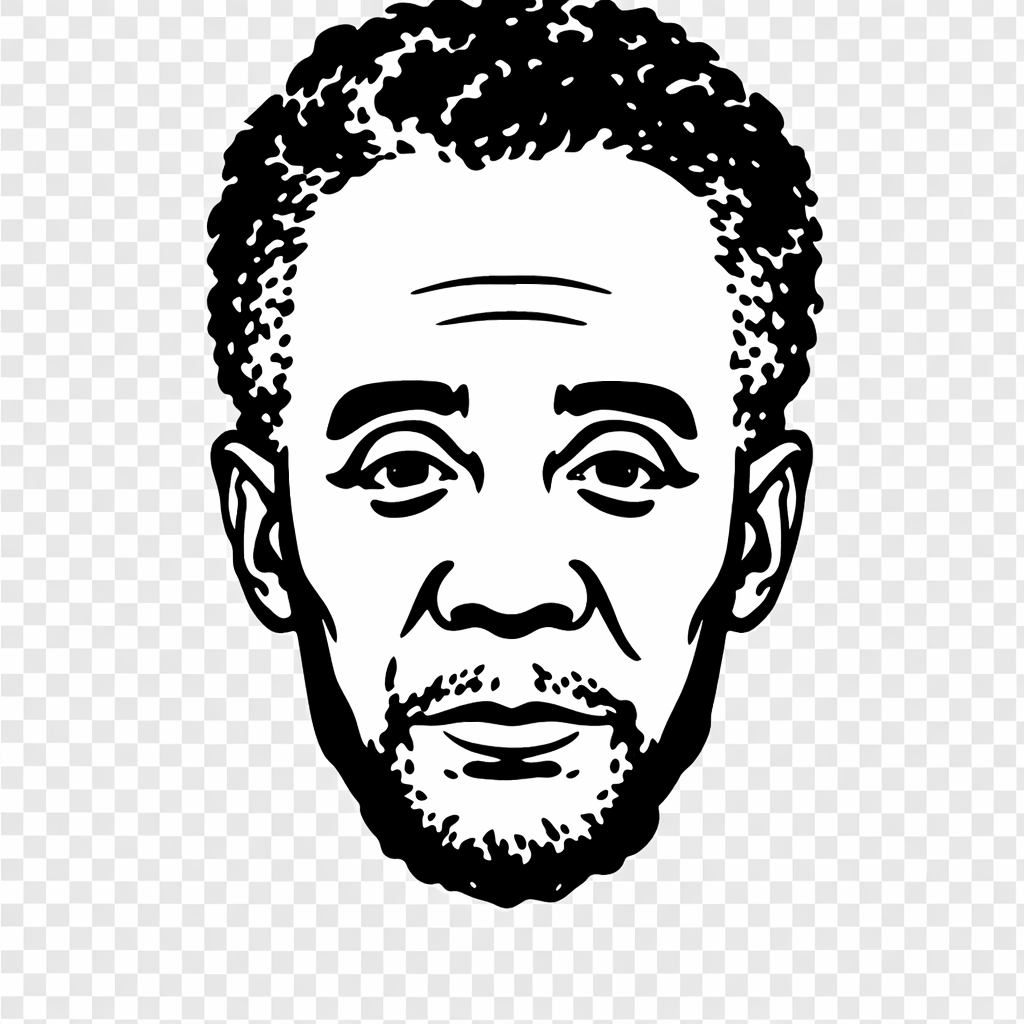
The background
- Nationality:
- Trinidadian
- Schools:
- Johnson–Forest Tendency, Marxist humanism
- Branchs:
- Marxism, Postcolonialism, Pan-Africanism, Trotskyism
- Period:
- 20th century
The synopsis
Cyril Lionel Robert James, also known by the pen-name J. R. Johnson, was a prominent Trinidadian historian, journalist, Trotskyist activist, and Marxist writer. His intellectual contributions spanned various fields, making him a significant figure in postcolonial literature and Marxist theory. James authored seminal works such as "World Revolution" (1937), which analyzed the Communist International, and "The Black Jacobins" (1938), a highly acclaimed history of the Haitian Revolution. He was also recognized for his play "Toussaint Louverture" and his novel "Minty Alley," both notable for featuring black professional actors and being the first of their kind published in the UK by a black writer. James's passion for sports led to his celebrated writings on cricket, including "Beyond a Boundary" (1963). He was an active political campaigner, involved in Pan-Africanism and advocating for West Indian independence. His life journey included periods in England and the United States, where he engaged with various political groups and intellectual movements, including the Johnson–Forest Tendency. James faced deportation from the US and returned to Britain, later teaching in the US and contributing to Ghanaian independence discourse. His legacy is marked by numerous tributes, publications, and his enduring influence on academic and political thought.
The works
The Black Jacobins
Beyond a Boundary
Minty Alley
Toussaint Louverture: The Story of the Only Successful Slave Revolt in History
World Revolution
Mariners, Renegades and Castaways
Nkrumah and the Ghana Revolution
The quotes
The most striking development of the great depression of 1929 is a profound skepticism of the future of contemporary society among large sections of the American people.
I must say the idea of a United Africa was nonsense.
The home stands in contrast to all other capitalist institutions as the last stronghold of pre-capitalist isolation.
Capitalism has socialized production. It has brought thousands of people together in the factory and involved them in new social relationships.
The international proletariat first appeared on the scene in the early Thirties of the nineteenth century, and its first great action was the French Revolution of 1848.
All peoples are entangled in the net of the world market.
I was a Labour Party man but I found myself to the left of the Labour party in Nelson, militant as that was. I came to London and in a few months I was a Trotskyist.
My father was a teacher, and there were teachers all around, his friends, they were working for the Government and their behaviour was within strictly limited areas.
I may as well say it, I have been married three times.
Today, in American imperialism, the commodity has reached its most grandiose historical manifestation.
In the last quarter of the eighteenth century bourgeois Europe needed to emancipate itself from that combination of feudalism and commercial capitalism which we know as mercantilism.
After World War I the resentment of the working class against all that it had to suffer was directed more against Morgan, Wall Street and private capital than the government.
First of all, Bolshevism represents revolution and the revolutionary struggle.
I had a national and international reputation. I had written the history and articles. So I brought to the Trotskyist movement some international reputation.
In World War II the hostility and the exasperation resulting from the statification of the economy and the strain of the war have been directed as much against the government as against private capital.
The Paris Commune was first and foremost a democracy. The government was a body elected by universal suffrage.
As the class struggle sharpens in the U.S. Marxism will come into its own as a great popular study.
One of the surest signs of the estimated changes in the consciousness of the American proletariat is to be found in the character of the demands now being put forward by the leadership.
It is not only that Germany has been defeated in the war, Kaiser Wilhelm's Germany was defeated.
Imperialist enterprise draws political consequences.
The country has undergone a profound social upheaval, the greatest the proletariat has ever known.
Du Bois marked a great stage in the history of Negro struggles when he said that Negroes could no longer accept the subordination which Booker T. Washington had preached.
It is over one hundred years since the abolition of slavery. The Negro people in the United States have taken plenty and they have reached a stage where they have decided that they are not going to take any more.
I had formed a black movement, so I would speak for the Trotskyist movement and then walk about a hundred yards to where the black movement was speaking.
Today we ought to be able to see first that Booker T. Washington faced a situation in which he was seeking desperately for a way out, and he could see no way out except capitulation.
The late development of mass industrial organization in the United States has both stimulated and retarded the political development of the American working class.
It is in revolutionary periods that the culmination of previous trends and the beginning of new ones appear.
Technological discoveries are the spermatozoa of social change.
The antagonisms between men and women express themselves in the most delicate phase of their life together - in their sexual relationship.
All the world has been converted and Washington is the modem Mecca.