The Philosopher
Bernard Williams
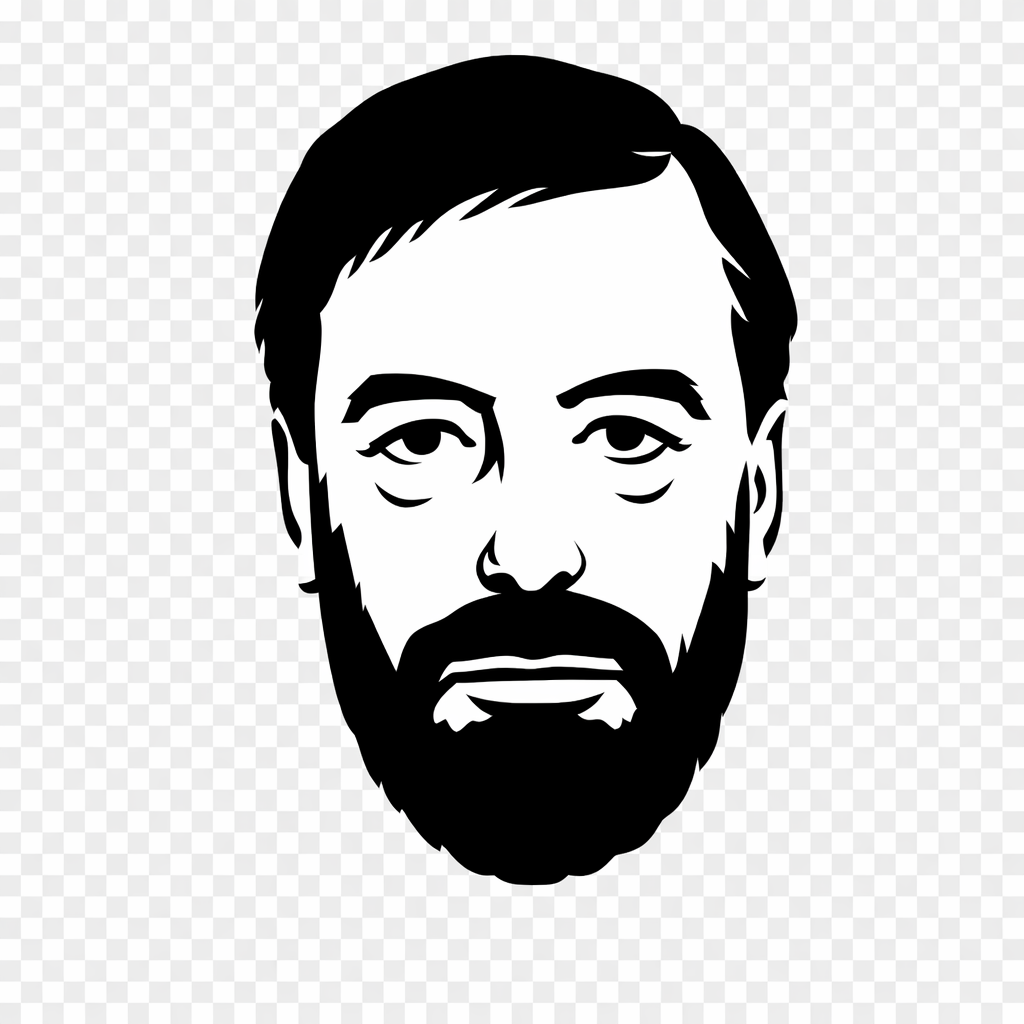
The face
The background
- Nationality:
- English
- Schools:
- Analytic philosophy, Contemporary philosophy
- Branchs:
- Ethics, Moral philosophy, Philosophy of action
- Period:
- Contemporary philosophy
The synopsis
Sir Bernard Arthur Owen Williams (1929–2003) was an influential English philosopher. His work primarily focused on ethics, moral philosophy, and the philosophy of action. Williams was known for his critical analyses of dominant ethical theories like utilitarianism and Kantianism, arguing that they often oversimplified the complexities of human moral experience. He advocated for a more nuanced approach that integrated insights from psychology, history, and literature, emphasizing the importance of concepts such as moral luck, integrity, and authenticity.
Educated at Chigwell School and Balliol College, Oxford, Williams studied Classics and Philosophy. After completing his national service with the Royal Air Force, he held academic positions at various prestigious institutions, including New College, Oxford, University College London, Bedford College, London, the University of Cambridge (where he was Knightbridge Professor of Philosophy and Provost of King's College), and the University of California, Berkeley. He was later White's Professor of Moral Philosophy at Oxford before retiring.
Williams's notable works include *Problems of the Self* (1973), *Moral Luck* (1981), *Ethics and the Limits of Philosophy* (1985), *Shame and Necessity* (1993), and *Truth and Truthfulness: An Essay in Genealogy* (2002). He was recognized for his ability to challenge conventional philosophical ideas and for his clear, often witty, prose. Williams was married twice, first to Shirley Williams and later to Patricia Law Skinner, and had three children. He was knighted in 1999 and died in Rome in 2003. His legacy lies in his rigorous critique of ethical theory and his enduring emphasis on the practical, lived reality of moral life.
The works
British Analytical Philosophy
Morality: An Introduction to Ethics
Problems of the Self
Utilitarianism: For and Against
Descartes: The Project of Pure Enquiry
Moral Luck: Philosophical Papers 1973–1980
Utilitarianism and Beyond
Ethics and the Limits of Philosophy
Shame and Necessity
Making Sense of Humanity
The Great Philosophers: Plato
Truth and Truthfulness: An Essay in Genealogy
In the Beginning was the Deed: Realism and Moralism in Political Argument
The Sense of the Past: Essays in the History of Philosophy
Philosophy as a Humanistic Discipline
On Opera
Essays and Reviews: 1959–2002
The quotes
If there's one theme in all my work, it's about authenticity and self-expression. It's the idea that some things are, in some real sense, really you - or express what you and others aren't.
The truth is that we all have to do more things than we can rightly do, if we are to do anything at all.
The people I really do dislike are the morally unimaginative kind of evolutionary reductionists who, in the name of science, think they can explain everything in terms of our early hominid ancestors or our genes, with their combination of high-handed tone and disregard for history. Such reductive speculation encourages a really empty scientism.
Disagreement does not necessarily have to be overcome. It may remain an important and constitutive feature of our relations to others and also be seen as something that is merely to be expected in the light of the best explanations we have of how such disagreement arises.
People who express themselves in paradoxes are in a strong position; and the more outrageous the paradox, in general the stronger the position.
I was interested in philosophy before I knew I was. That's to say, when I was at school, I used to argue with my friends about issues that turned out to be philosophical ones of some kind.
Few things are as democratic as a snowstorm.
Philosophy is altogether less pure now. It's been impurified by science and social science and history.
A friend is a lot of things, but a critic isn't.
I like the word 'indolence'. It makes my laziness seem classy.
People who say, 'Let the chips fall where they may,' usually figure they will not be hit by a chip.
Women have a favorite room, men a favorite chair.
I was attracted to opera when I was 15 or 16. A very rich man in England bankrupted himself to put on a lot of opera during the war, but he converted a lot of people, myself included, in the process.
Tragedy is formed 'round ideas it does not expound, and to understand its history is, in some part, to understand those ideas and their place in the society that produced it.
Virtually the only subject in which one could ever get a scholarship to Oxford or Cambridge was classics. So I went to Oxford to study classics and, unlike Cambridge, it had a philosophy component, and I became completely transported by it.
If a June night could talk, it would probably boast it invented romance.
A half-truth is usually less than half of that.
People have been predicting the death of philosophy since the 17th century. When I was a student, people were saying, 'We're in the last days of philosophy.' Then we were told in the '60s it would be replaced by sociology, then by literary criticism.
'Humanity' is a name not merely for a species but also for a quality.
Contemporary moral philosophy has found an original way of being boring, which is by not discussing moral issues at all.
An extravagance is something that your spirit thinks is a necessity.