The Philosopher
Baron de Montesquieu
The face
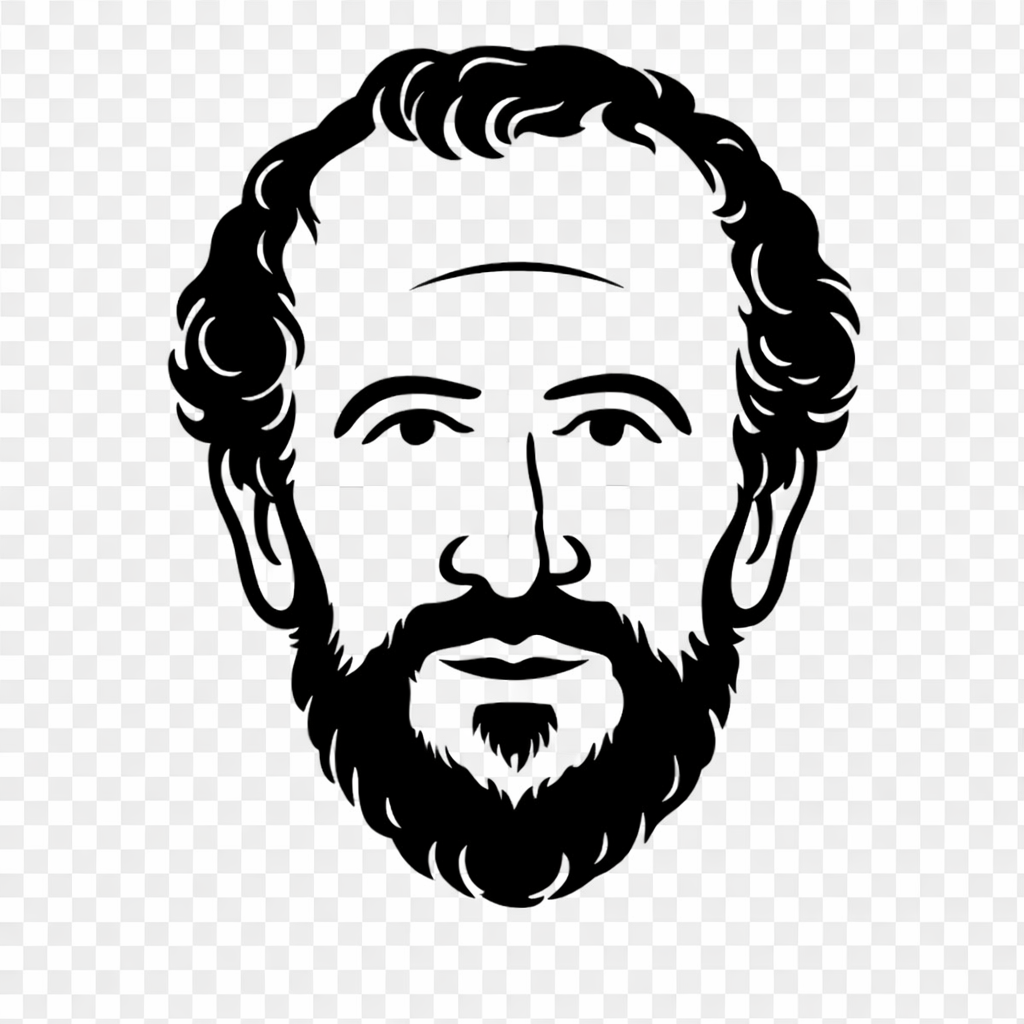
The background
- Nationality:
- French
- Schools:
- Enlightenment, Classical liberalism
- Branchs:
- Political philosophy, Anthropology
- Period:
- 18th-century philosophy
The synopsis
The works
Persian Letters
Considerations on the Causes of the Greatness of the Romans and their Decline
The Spirit of Law
The quotes
Religious wars are not caused by the fact that there is more than one religion, but by the spirit of intolerance... the spread of which can only be regarded as the total eclipse of human reason.
When the body of the people is possessed of the supreme power, it is called a democracy.
There is no nation so powerful, as the one that obeys its laws not from principals of fear or reason, but from passion.
In bodies moved, the motion is received, increased, diminished, or lost, according to the relations of the quantity of matter and velocity; each diversity is uniformity, each change is constancy.
Talent is a gift which God has given us secretly, and which we reveal without perceiving it.
As soon as man enters into a state of society he loses the sense of his weakness; equality ceases, and then commences the state of war.
Thus the creation, which seems an arbitrary act, supposes laws as invariable as those of the fatality of the Atheists. It would be absurd to say that the Creator might govern the world without those rules, since without them it could not subsist.
Man, as a physical being, is like other bodies governed by invariable laws.
If the triangles made a god, they would give him three sides.
If I knew of something that could serve my nation but would ruin another, I would not propose it to my prince, for I am first a man and only then a Frenchman... because I am necessarily a man, and only accidentally am I French.
If triangles had a god, they would give him three sides.
But constant experience shows us that every man invested with power is apt to abuse it, and to carry his authority as far as it will go.
The less men think, the more they talk.
If we only wanted to be happy, it would be easy; but we want to be happier than other people, and that is almost always difficult, since we think them happier than they are.
There are three species of government: republican, monarchical, and despotic.
Law in general is human reason, inasmuch as it governs all the inhabitants of the earth: the political and civil laws of each nation ought to be only the particular cases in which human reason is applied.
We must have constantly present in our minds the difference between independence and liberty. Liberty is a right of doing whatever the laws permit, and if a citizen could do what they forbid he would no longer be possessed of liberty.
False happiness renders men stern and proud, and that happiness is never communicated. True happiness renders them kind and sensible, and that happiness is always shared.
The law of nations is naturally founded on this principle, that different nations ought in time of peace to do one another all the good they can, and in time of war as little injury as possible, without prejudicing their real interests.
Although born in a prosperous realm, we did not believe that its boundaries should limit our knowledge, and that the lore of the East should alone enlighten us.
When the legislative and executive powers are united in the same person, or in the same body of magistrates, there can be no liberty; because apprehensions may arise, lest the same monarch or senate should enact tyrannical laws, to execute them in a tyrannical manner.
Luxury ruins republics; poverty, monarchies.
There is no one, says another, whom fortune does not visit once in his life; but when she does not find him ready to receive her, she walks in at the door, and flies out at the window.
Men, who are rogues individually, are in the mass very honorable people.
I have always observed that to succeed in the world one should seem a fool, but be wise.