The Philosopher
Augusto Del Noce
The face
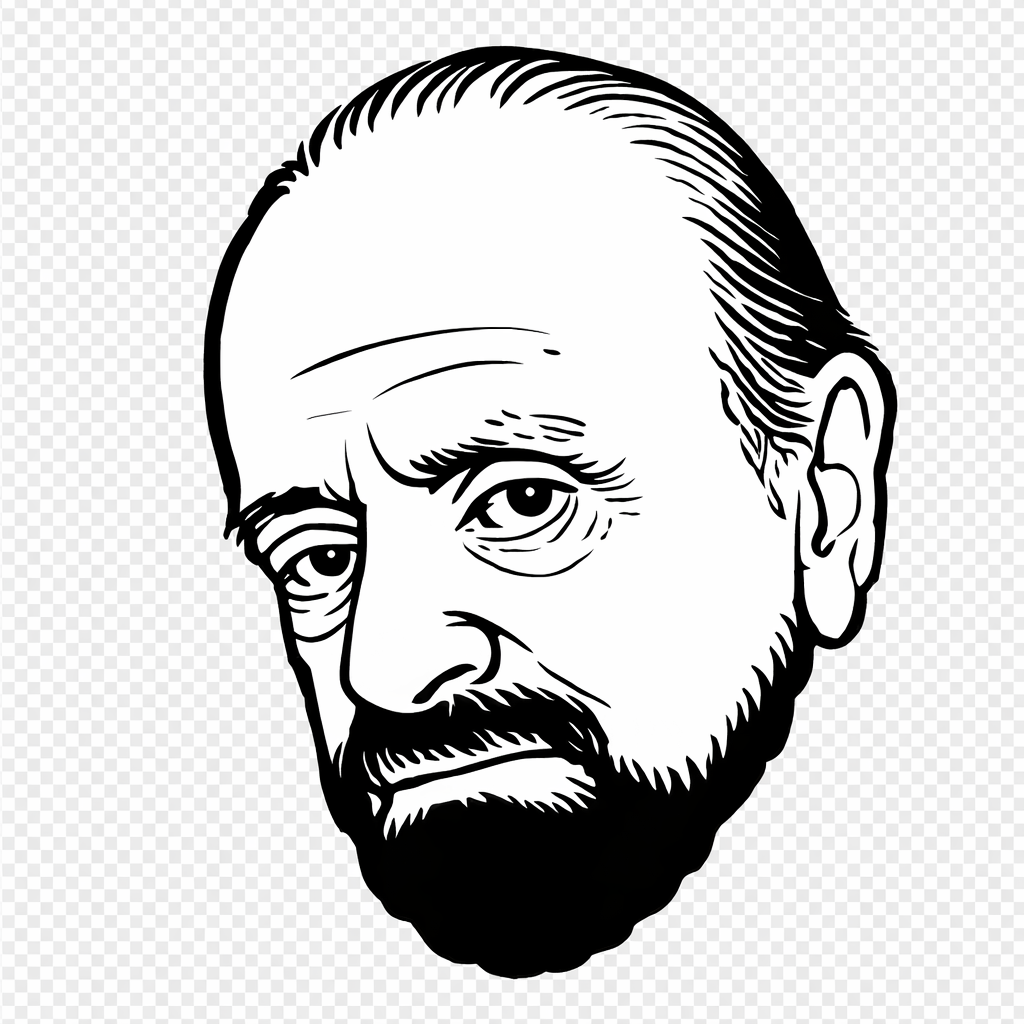
The background
- Nationality:
- Italian
- Schools:
- Continental philosophy
- Branchs:
- Continental philosophy, Philosophy, Political science
- Period:
- 20th-century philosophy
The synopsis
Augusto Del Noce (11 August 1910 – 30 December 1989) was an Italian philosopher and political thinker. He is regarded as one of the preeminent political thinkers and philosophers after the Second World War in Italy. Born in Tuscany, he grew up and studied in Turin. He completed his degree in Philosophy in 1932 at the University of Turin, with a dissertation on Malebranche. Between 1934 and 1943 he published a series of essays on early modern philosophy that established his reputation as a specialist. His studies reflected a broader interest in the relationship between Catholic thought and secular culture. After the war, Del Noce turned to the question of the relationship between Christianity and Communism. In 1946 he published two essays on Marx, which included a discussion of atheism in Marx’s philosophy. His works on Marx were part of a lifelong interest in the role of atheism in the history of modern philosophy, culminating in his 1964 magnum opus, *The Problem of Atheism*. In 1965, he published *Catholic Reformation and Modern Philosophy, Vol. 1: Descartes*. In 1966, Del Noce was appointed Professor of History of Modern and Contemporary Philosophy at the University of Trieste, moving to the University of Rome "La Sapienza" in 1970, where he became Professor of History of Political Doctrines and later Professor of Political Philosophy. During the late 1960s and early 1970s, Del Noce's focus shifted to secularization and contemporary history. Some of his essays from this period were published in the 1971 volume *The Age of Secularization*. Later, Del Noce wrote two new books, *The Catholic Communist* and *The Suicide of the Revolution,* arguing that the dissolution of Marxism into neo-bourgeois nihilism was already at work in the thought of Antonio Gramsci. In his final years, he became a public intellectual, writing for newspapers and magazines, and serving as a senator. His final work was a monograph on the philosophy of Giovanni Gentile. Del Noce died on December 30, 1989. He is remembered for his exegesis of Marx's philosophy, his interpretation of Fascism, and his critique of the progressive-technocratic culture that dominated Europe after World War II. A common thread in his work is the connection between philosophical ideas and socio-political history, arguing that philosophical options shape history and that modern history, particularly Marxism, leads to contradictions and nihilism.
The works
Il problema dell'ateismo
Riforma cattolica e filosofia moderna, vol. I, Cartesio
L'epoca della secolarizzazione
Il suicidio della rivoluzione
Il cattolico comunista
Giovanni Gentile. Per una interpretazione filosofica della storia contemporanea
The Crisis of Modernity
The Age of Secularization
Marxism died in the East because it realized itself in the West
The Problem of Atheism