The Philosopher
Apollonius of Tyana
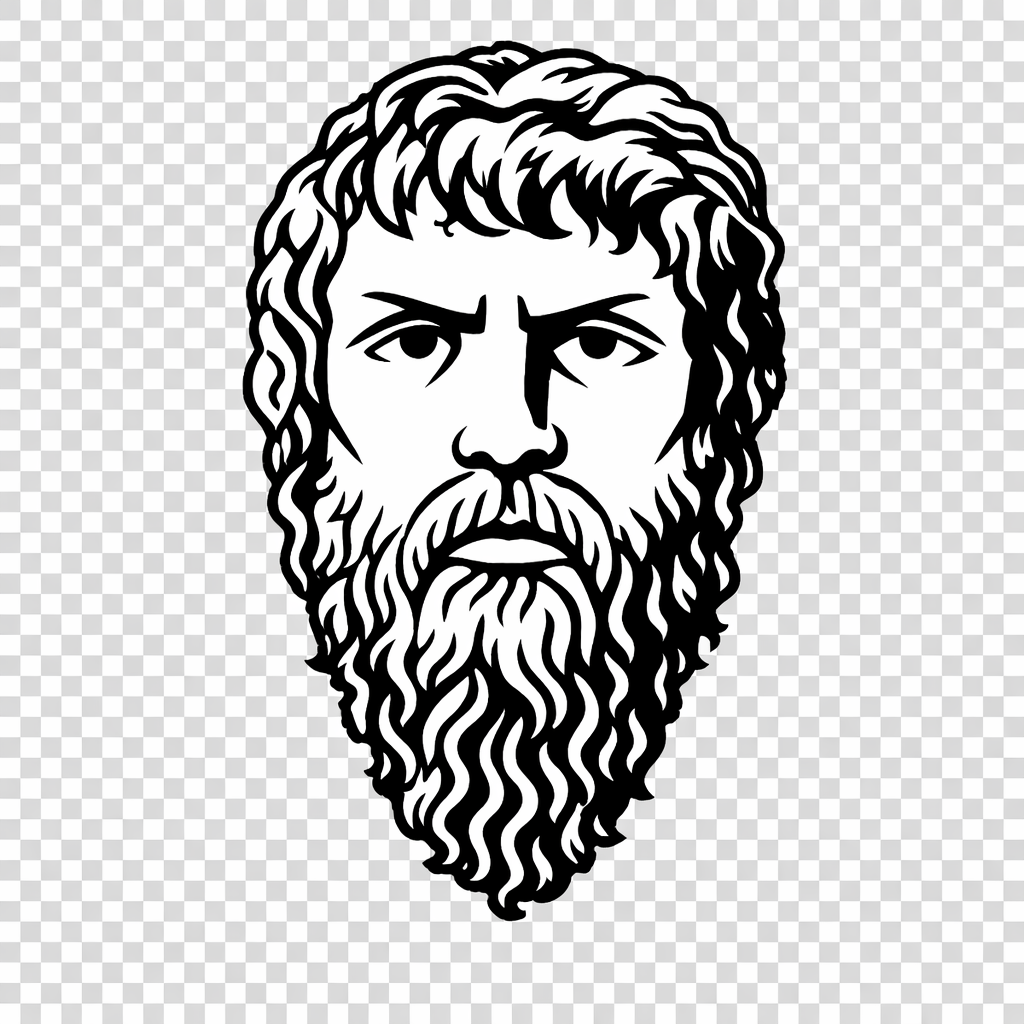
The face
The background
- Schools:
- Neopythagoreanism
- Period:
- 1st century AD
The synopsis
Apollonius of Tyana was a Greek philosopher and religious leader from Tyana, Cappadocia in Roman Anatolia. He spent his life traveling and teaching in the Middle East, North Africa, and India. Apollonius is a central figure in Neopythagoreanism and was renowned as a miracle worker. His exceptional personality and mystical lifestyle were highly regarded by his contemporaries and left a lasting cultural impact. Numerous legends, as documented in the *Life of Apollonius*, describe his alleged miracles performed as a wandering sage, often accompanied by his companion Damis. He was tried for conspiring against the emperor and using magic. Following his conviction and death sentence, his followers believed in his ascension to heaven. Most scholars agree on his historical existence. He was born around AD 15 and died around AD 100. His primary biographer, Philostratus, portrayed him as a philosopher with supernatural abilities, a narrative that shaped his image for posterity.
The works
The quotes
The gods, as they are beneficent, if they find anyone who is healthy and whole and unscarred by vice, will send him away, surely, after crowning him, not with golden crowns, but with all sorts of blessings.
I pray as follows: May justice reign, may the laws not be broken, may the wise men be poor, and the poor men rich, without sin.
All the earth is mine, and I have a right to go all over it and through it.
It is at the time of dawn that we must commune with the gods.
I asked questions when I was a stripling, and it is not my business to ask questions now, but to teach people what I have discovered.
O ye gods, grant unto me to have little and to want nothing.
Festivals cause diseases, since they lighten cares but increase gluttony.
Pythagoras said that medicine is the most godlike of arts. But if the most godlike, it should tend to the soul as well as the body, or else a living thing must be unhealthy, being diseased in its higher part.
Virtue comes by nature, learning, and practice, and thanks to virtue, all of the aforesaid may deserve approval.
I delight to lodge in such temples as are not regularly kept closed. None of the gods reject me; they make me partner of their roof.
It is the duty of the law-giver to deliver to the many the instructions of whose truth he has persuaded himself.
My ideal is for each to do what he knows and what he can.
I have not yet learned to keep still.
In my judgment, excellence and wealth are direct opposites, since when the one shrinks, the other grows, and when one grows, the other shrinks.
O thou Sun, send me as far over the earth as is my pleasure and thine, and may I make the acquaintance of good men, but never hear anything of bad ones, nor they of me.
As soldiers need not only courage but tactics also, so does a philosopher need not only courage and philosophy but discernment also, to tell what his right time of dying is - so that he neither seek it nor flee it.
A man must fortify himself and understand that a wise man who yields to laziness or anger or passion or love of drink, or who commits any other action prompted by impulse and inopportune, will probably find his fault condoned; but if he stoops to greed, he will not be pardoned, but render himself odious as a combination of all vices at once.
Never may a man prone to believe scandal be a despot or a popular leader! Under his guidance, democracy itself will be despotism.
If you have problems of conduct that are difficult and hard to settle, I will furnish you with solutions, for I not only know matters of practice and duty, but I even know them beforehand.
It is a true man's part not to err, but it is also noble of a man to perceive his error.
You need not wonder at my knowing all human languages; for, to tell you the truth, I also understand all the secrets of human silence.
Every argument is incapable of helping unless it is singular and addressed to a single person. Therefore, one who discourses in any other way presumably does so from love of reputation.
Plato said that virtue has no master. If a person does not honor this principle and rejoice in it, but is purchasable for money, he creates many masters for himself.
In my travels, which have been wider than ever man yet accomplished, I have seen many, many wild beasts of Arabia and India; but this beast, that is commonly called a Tyrant, I know not how many heads it has, nor if it be crooked of claw, and armed with horrible fangs.
If any man has left us for fear of Nero, I shall not account him a coward; but I shall hail as a philosopher any man who has been superior to this fear, and I shall teach him all I know.
Don't keep your good manners to the end another time, but begin with them.
The gods do not need sacrifices, so what might one do to please them? Acquire wisdom, it seems to me, and do all the good in one's power to those humans who deserve it.
Just as an individual of pre-eminent worth transforms democracy into a monarchy of the best man, even so the rule of one man, if in all things it has an eye to the common welfare, is democracy.
I asked certain rich men if they felt embittered. 'How could we not?' they said. So I asked them what caused this anguish. They blamed their wealth.
Nero may have understood how to tune his cithern, but he disgraced his imperial office both by slackening and by tightening the strings.
Do not consider that to be wealth which is hoarded away, for how is it better than sand gathered from the nearest heap? Nor that which comes in from men who groan at their taxes: for the gold that is wrung from tears is of base alloy and black.
I feel friendship towards philosophers, but towards sophists, teachers of literature, or any other such kind of godforsaken people, I neither feel friendship now, nor may I ever do so in the future.